Why a Realtor Outside Your Social Circle Can Net More
May 14, 2026
May 14, 2026
There is a version of this story that plays out regularly in Milwaukee's finer neighborhoods. A homeowner decides to sell. A friend — someone from their social circle, a neighbor's spouse, a golf acquaintance who got their license a few years ago expresses interest in representing them. The homeowner, not wanting to create awkwardness, agrees.
Months later, after a quiet listing, a price reduction, and a closing that left money on the table, they quietly wonder what went wrong.
What went wrong, in most cases, wasn't malicious. It was structural.
Choosing a real estate agent because you know them personally is understandable. It feels safe. It carries the implicit promise of loyalty and care. But familiarity and professional competence are two entirely different things and when the stakes involve the largest financial transaction most people will make in a given decade, conflating the two is costly.
A friend who holds a real estate license is not the same as a seasoned listing specialist who negotiates at a high level, maintains an active buyer network, understands how to position a property for maximum market interest, and has the professional distance to deliver difficult advice without fearing the dinner party afterward.
That last point matters more than most sellers anticipate.
One of the most under appreciated qualities in a listing agent is the ability to tell a seller what they do not want to hear and to do so without hesitation.
A property needs to be priced correctly from the start. Overpricing, even by a modest margin, signals to informed buyers that the seller is either uninformed or inflexible. It reduces showing activity in the critical first weeks on market, when buyer interest is highest. And once a listing goes stale, recovering lost momentum requires either a significant price reduction or patience most sellers don't have.
A friend or family acquaintance operating as your agent faces a fundamental conflict: they want to keep the relationship intact. That impulse is entirely human and entirely reasonable but can lead to accommodating an overpriced listing rather than insisting on a sound one. It can lead to softer feedback on staging, reluctance to push back on cosmetic decisions, and a general tendency to prioritize the seller's emotional comfort over their financial outcome.
An agent without a personal stake in the relationship has no such friction. They are there to do one thing well.
Beyond the question of candor, there is the question of reach.
High-performing listing agents spend years cultivating professional networks, relationships with buyers' agents, relocation specialists, attorneys, financial advisors, and developers who are actively moving clients through the market. When a well-connected agent lists a property, that listing enters a circulation that extends far beyond the MLS. It reaches buyers who haven't started searching publicly yet. It reaches agents who have qualified clients ready to move.
A friend who sells two or three homes a year, primarily through personal connections, does not have that network. They have goodwill. Goodwill does not negotiate competing offers.
The difference between a moderately connected agent and a deeply networked one is often measured not in exposure but in the quality of the buyer pool and ultimately in the terms of the final contract.
Selling a home is not simply a matter of finding an interested buyer. It is a negotiation, and negotiations have a psychology that most people outside of professional practice underestimate.
How an offer is received, how inspection findings are addressed, how contingencies are structured, how a counteroffer is framed, each of these moments is an opportunity either to strengthen or to erode a seller's position. Agents who negotiate frequently and at a high level approach these moments with composure, strategy, and a clear understanding of what the other side wants.
An agent who is also a friend brings an additional variable into that process: the awareness, however subconscious, that pushing too hard might cost them the relationship. That awareness does not belong in a negotiation room.
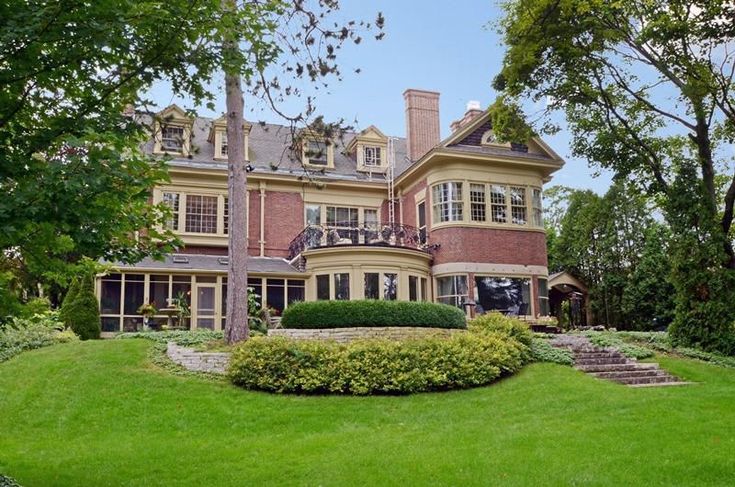
Milwaukee's upper-tier market like the Historic Third Ward condominiums, the Italianate and Tudor estates along Lake Drive, the larger homes in Whitefish Bay, Fox Point, and Mequon — moves on relationships and reputation. These are not interchangeable properties, and they are not sold through volume tactics.
Buyers in this segment are typically well-advised themselves. They come with experienced buyers' agents, often with legal or financial counsel, and they know how to read a listing that has been strategically positioned versus one that has simply appeared on the market. The quality of the representation on the seller's side of the table is visible to them.
In this context, choosing an agent based on social proximity rather than professional standing is a decision that the market notices, even when the seller does not.
Milwaukee sellers in this tier benefit most from agents who understand the architecture and history of what they're selling, who can speak credibly to the value of a Cream City brick Victorian or a mid-century lakefront property, and who bring a buyer network that extends beyond the immediate neighborhood. That level of representation is rarely found in a casual professional relationship.
The financial case against hiring within your social circle is straightforward, even if it is rarely discussed openly.
A listing priced incorrectly from the start, handled by an agent without deep market relationships, and negotiated by someone whose primary concern is preserving a friendship will, on average, produce a lower sale price, longer days on market, and a more stressful closing process than a listing handled by a specialist with nothing to lose but the commission.
That difference in net proceeds, in time, in the quality of the transaction is the real cost of the comfortable choice.
It is worth naming clearly, because most sellers only recognize it in retrospect.
None of this is an argument against kindness, loyalty, or supporting people in your network. It is simply an observation that a real estate transaction, particularly one involving a significant property, deserves the same clear-eyed professionalism you would apply to choosing a surgeon, a litigator, or a financial manager.
You would not choose those professionals because you knew them at a party.
If you are preparing to sell in Milwaukee or the surrounding communities and want to understand what a strategic, fully committed representation looks like in practice, Walters Realty Group is a straightforward conversation worth having.









Whether you are buying, selling, or stepping into a new chapter, Walters Realty Group delivers the expertise, strategy, and elevated service to make your move seamless from start to finish. Connect with our team today and let us guide your next move with confidence.