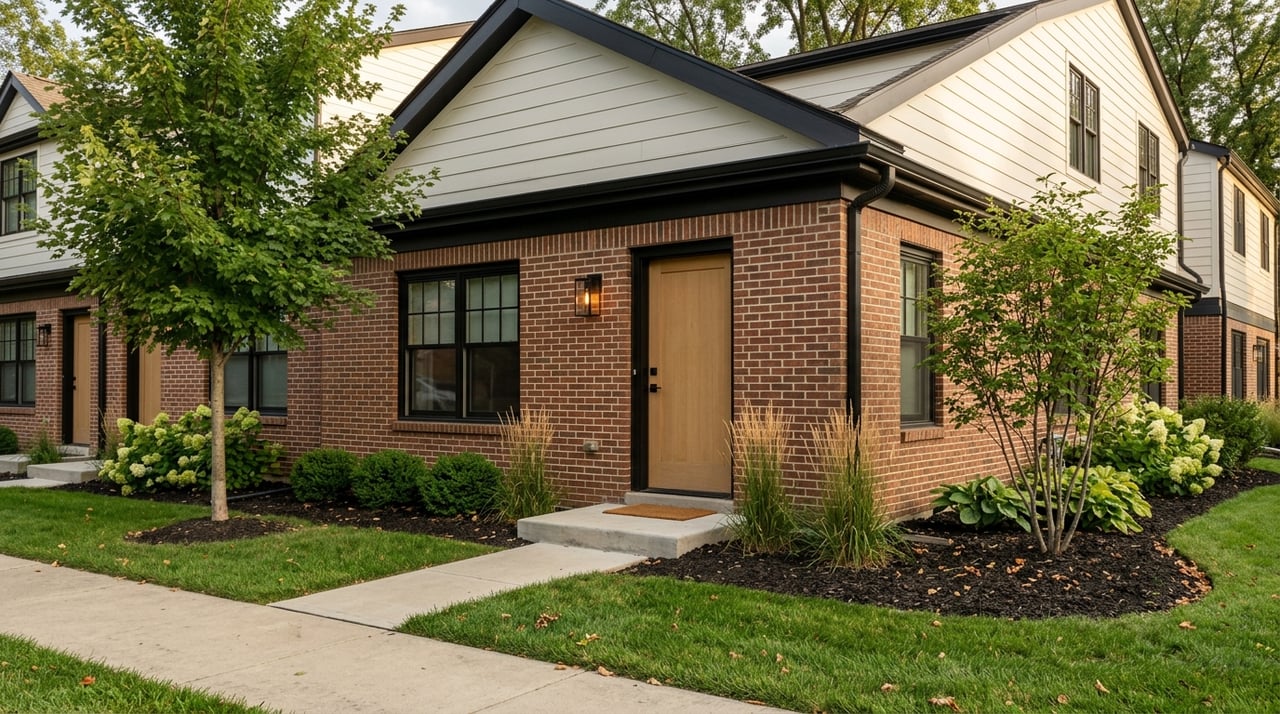
Glendale Starter Homes And Condo Options Explained
April 16, 2026
April 16, 2026
If you want to buy in Glendale, the biggest question may not be whether you like the area. It may be which type of home gives you the best start. Between detached starter homes and lower-entry condo options, Glendale gives you more than one path into ownership, but each path comes with different costs, tradeoffs, and timing. This guide will help you understand what buyers are likely to find in Glendale, how pricing compares, and what to watch for before you make an offer. Let’s dive in.
Glendale is a close-in suburb about 4 miles from Milwaukee and less than 10 miles north of downtown, according to the City of Glendale. Because the city is largely built out, most newer housing supply comes through redevelopment instead of large new subdivisions.
That matters when you start your search. In many established suburbs, inventory can feel limited because there are fewer chances for large-scale new construction to add entry-level options. Glendale’s 2023 housing additions were concentrated in multifamily development near the Bayshore/Lydell area, with the city reporting 312 residential units completed and 311 of them in multifamily buildings.
Glendale’s housing stock is still led by detached homes. The city’s 2023 Housing Affordability Report says about 58.5% of units are 1-unit detached, while 19.7% are in buildings with 20 or more units.
For buyers, that means single-family homes are still the most common ownership option, but condos and multifamily-style living are also part of the local market. The same report notes that Glendale was essentially built out by 1970, which helps explain why many available homes are part of an established housing inventory rather than brand-new neighborhoods.
Age of housing can shape what your budget buys. The city reports that about 45% of homes were built between 1950 and 1970, around 40% after 1970, and about 15% before 1950. In practical terms, you may find solid layouts and mature surroundings, but some homes may also need updates depending on condition and prior improvements.
The city also notes that most homes have 2 or 3 bedrooms, which can be helpful if you are looking for a practical starter layout instead of a very small unit. That makes Glendale relevant for buyers who want enough space to grow into the home without jumping straight into a larger move-up price point.
Current pricing sources place Glendale above Milwaukee overall, though the exact number depends on the source and methodology. Zillow reports an average Glendale home value of $351,578, while Milwaukee’s average home value is lower at $220,137, based on the same Zillow home value data. The U.S. Census QuickFacts profile for Glendale also shows a median owner-occupied housing value of $282,800, which is useful as a long-term baseline even if active market pricing is currently higher.
For detached homes, current active listing examples suggest many starter or near-starter options fall in the mid-$200,000s to mid-$300,000s. Listings cited in current Zillow inventory include homes at $249,000, $254,900, $300,000, $329,900, and $350,000, while larger or more updated homes can move into the upper $300,000s, $400,000s, and beyond, according to current Glendale listings on Zillow.
For condos, the price point is typically lower, but inventory is thinner. Redfin’s Glendale condo page currently shows only two condos for sale, with a median listing price of $192,000 and examples at $174,900 and $220,000. The same page shows HOA fees around $500 to $535 per month, based on current Glendale condo listings.
Choosing between a single-family home and a condo is often less about which one is “better” and more about which one fits your finances, lifestyle, and comfort level with upkeep.
Single-family homes usually offer more privacy, more yard space, and more flexibility for future improvements. If you want greater control over landscaping, renovations, or how you use the property, a detached home may feel like the better long-term fit.
That flexibility matters in Glendale because detached homes remain the dominant housing type, according to the city’s housing report. If your goal is to settle into a home you can personalize over time, single-family inventory will likely be your main focus.
Condos can be one of the most realistic lower-cash-entry options in Glendale. With current examples below the pricing of many detached homes, they may help you buy into the area sooner, especially if a single-family budget feels stretched.
Condos can also appeal if you want lower-maintenance living. While responsibilities vary by community, condo ownership often reduces the amount of exterior upkeep you personally manage compared with a detached home.
The lower purchase price of a condo does not always mean a lower monthly cost. HOA dues are part of your actual housing payment, and those fees need to be evaluated alongside your mortgage, taxes, insurance, and utilities.
According to Fannie Mae’s condo buying guidance, buyers should ask about HOA fees, reserve funds, special assessments, insurance coverage, and whether the project is warrantable for financing. Those details can affect both affordability and loan approval.
If you are considering a condo in Glendale, document review matters. Before moving forward, you will want to understand what the association fee covers, what rules apply, and whether the building has adequate financial reserves.
Fannie Mae’s HOA guidance recommends reviewing the bylaws or CC&Rs, asking about reserve funding, and understanding whether special assessments are possible. This is especially important because recurring fees can rise over time, and assessments can change the true cost of ownership.
You will also want your lender to confirm project eligibility early if you are using conventional or government-backed financing. Condo project rules can affect whether a unit is financeable, so it is smart to check that up front rather than after you are emotionally invested in one property.
Glendale is not a market where you can always assume you have time to think for days. Redfin describes Glendale as very competitive, noting that many homes receive multiple offers and some buyers waive contingencies.
That does not mean you should rush into an unsafe decision. It does mean your preparation matters. The more ready you are before the right listing appears, the more confidently you can act when timing gets tight.
Mortgage rates also shape affordability. Freddie Mac reported a 30-year fixed-rate average of 6.37% on April 9, 2026, which is an important reminder that your monthly payment may shift meaningfully with rate changes even if the purchase price stays the same.
A competitive offer starts before you tour homes. The Consumer Financial Protection Bureau says a preapproval letter helps show sellers you are serious, and preapprovals often expire in 30 to 60 days.
The CFPB also recommends understanding key protections in your offer, including financing and inspection contingencies. In a competitive market, you may hear about buyers waiving protections, but that does not mean waiving them is right for you. A smart strategy balances strength with protection.
It also helps to budget beyond your down payment. The CFPB notes that closing costs typically run about 2% to 5% of the purchase price, and your monthly ownership costs can include:
If you are buying in Wisconsin, financing assistance may also be worth exploring. WHEDA mortgage programs currently include Advantage Conventional, Advantage FHA, down payment assistance products, and an MCC program for eligible borrowers.
A starter home in Glendale may fit you best if you want more control, more privacy, and room to make changes over time. You may pay more upfront than you would for a condo, but you may also gain flexibility that matters to your long-term plans.
A condo may fit you best if your priority is a lower entry price, a simpler day-to-day maintenance load, or a way to enter the Glendale market sooner. You just need to evaluate the full monthly cost, not only the sticker price.
If you are comparing both, it helps to look at three numbers side by side:
That clearer side-by-side view can keep you from overfocusing on list price alone.
Buying your first home, your next home, or a right-size condo in Glendale can feel like a big decision, especially in a competitive market with limited inventory. The good news is that you do not have to sort through pricing, property type tradeoffs, and offer strategy on your own. If you want clear, step-by-step guidance tailored to your goals, connect with Walters Realty Group for a polished, education-first buying experience.




Whether you are buying, selling, or stepping into a new chapter, Walters Realty Group delivers the expertise, strategy, and elevated service to make your move seamless from start to finish. Connect with our team today and let us guide your next move with confidence.