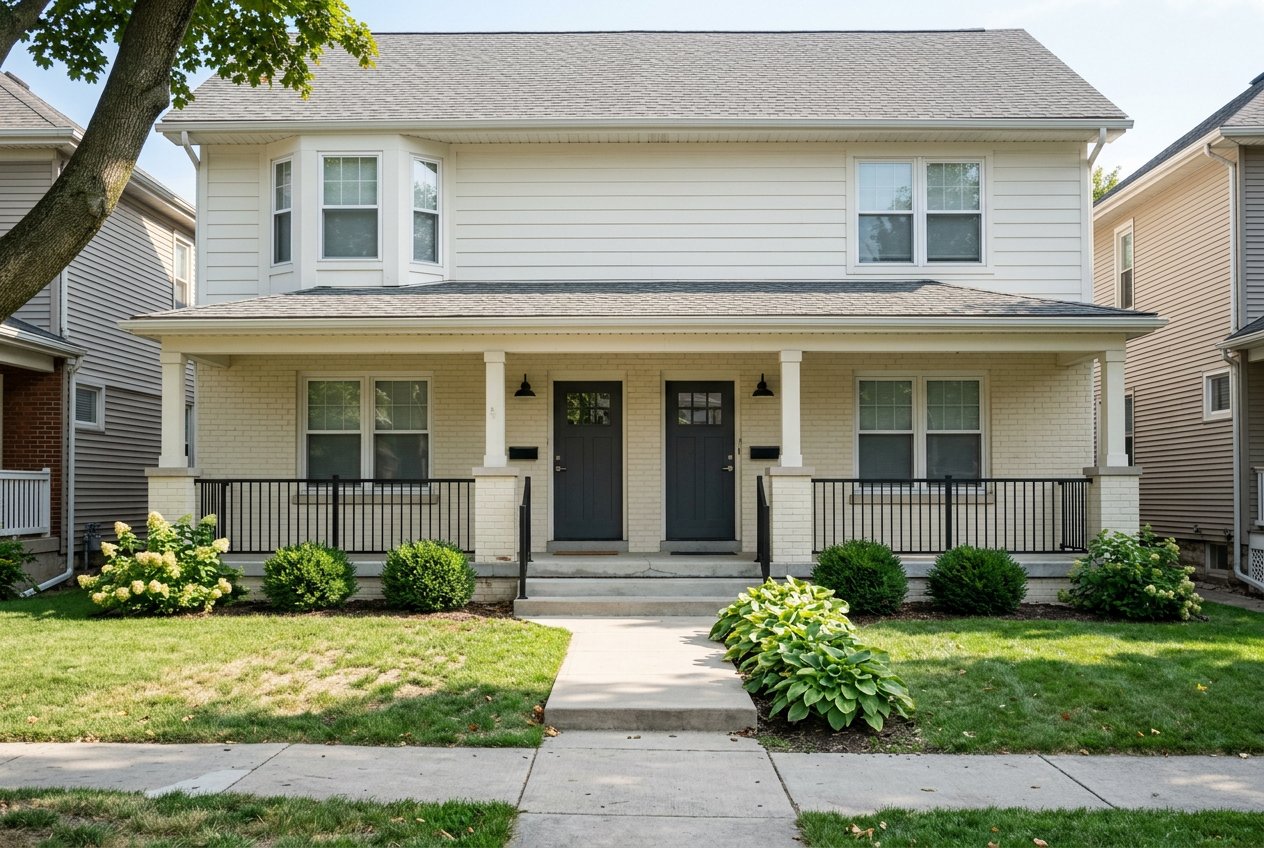
Getting Started With Duplex Investing In Milwaukee
March 24, 2026
March 24, 2026
Thinking about buying your first duplex in Milwaukee, but not sure where to start? You are not alone. Many first-time investors want steady cash flow and long-term equity, yet the steps can feel confusing. In this guide, you will learn how to read the numbers, what “tenant ready” really means in Milwaukee, the financing paths that work, and the key city rules to check before you write an offer. Let’s dive in.
Milwaukee offers a wide range of duplex options at different price points, which gives you room to match your budget and strategy. The city’s typical home value recently sat around the low $200,000s, and average apartment rents were reported near the mid $1,500s per month. At the same time, recent rental-market reports noted a jump in vacancy citywide in 2025 compared with 2024, which means you should underwrite with a realistic vacancy allowance and be ready for concessions in softer pockets. Put simply, you have opportunity, but you also need to model conservatively.
For rents, you can review neighborhood-level averages and recent listing trends through sources that track the local market. For example, you can see current averages and area snapshots in the city’s core neighborhoods using the latest data from RentCafe. Checking those numbers against on-the-ground comps helps you avoid overestimating potential income.
You will see wide price variation across Milwaukee. Some inner-city blocks and distressed ZIP codes show duplexes priced under $100,000, often with significant rehab needs. Outlying city ZIPs and more stable pockets frequently trade in the $200,000 to $350,000 range or higher, especially for cleaner two-flats with updated systems. Your goal is to pair block-level comps with an honest condition assessment so your offer reflects both the neighborhood and the work required to reach tenant-ready status.
A simple framework keeps you grounded when you evaluate a duplex:
Your cash-on-cash return depends on your loan. Run side-by-side scenarios for 3.5 percent down (owner-occupant FHA) and 20 percent down (conventional investor) so you see the difference in payment, required reserves, and break-even. For professional management, plan for a monthly fee in the range commonly seen in many U.S. markets; industry guidance suggests about 8 to 12 percent of collected rent plus tenant-placement and maintenance fees. Get an actual quote from a Milwaukee provider so your budget reflects local pricing.
If you plan to live in one unit, FHA financing is a popular on-ramp for 2 to 4 unit properties. You can put as little as 3.5 percent down if you meet credit and program guidelines, and you must occupy the property as your primary residence within the required period. Many owner-occupants also use FHA’s 203(k) program to roll eligible repairs into one mortgage. Review a consumer overview of FHA basics and talk with a local lender about current loan limits and underwriting.
If you will not occupy the property, expect larger down payments and tighter underwriting for investment loans. Many lenders will use a conservative portion of market rent in your qualifying math, and you may need post-closing reserves. Debt-service coverage ratio (DSCR) and portfolio loans can offer flexibility for non-owner-occupied purchases, with terms that focus on property cash flow. A local lender who works with small multifamily is your best guide to today’s rates and requirements.
The City of Milwaukee’s Department of Neighborhood Services (DNS) enforces building and habitability standards. DNS can issue orders to repair, perform emergency fixes, and place placards on unsafe units. Tenants also have tools when essential services are not provided. Review the city’s process for code violations, orders, and enforcement so you understand your obligations before you buy. For heat or other essential services, the city outlines how complaints work and what triggers action.
Before closing, confirm that the property is legally a duplex and that any required occupancy certificates are in place. The City’s Permit and Development Center and Special Enforcement sections can help verify use, orders, or placards tied to a property record. An early check avoids costly surprises after closing.
Milwaukee adopted an ordinance that requires lessors of residential buildings with 3 or more dwelling units to disclose fire-safety details to tenants. Duplexes are not the target, but the rule matters if you consider a triplex or four-unit.
Wisconsin law includes an implied warranty of habitability and rules for notices, repairs, and security deposits. Tenants have defenses in certain cases, so your lease and maintenance plan should reflect state law. A legal-aid summary is a helpful starting point, and you should consult an attorney for lease language.
A tenant-ready unit in Milwaukee meets code, is safe, and presents well. At a minimum, you need reliable heat, hot water, sound plumbing and electrical, safe egress, and working smoke and carbon monoxide alarms. Plan for immediate compliance items that show up in your inspection report. If the building is pre-1978, follow federal lead-based paint disclosure rules and lead-safe work practices when you renovate.
Finishes also shape rent and turnover time. Fresh paint, durable flooring, clean kitchens and baths, secure entries, and working appliances go a long way. If the property has structural or mechanical issues such as roof leaks, foundation movement, knob-and-tube wiring, or aging boilers, build a larger rehab budget and timeline. When you finance repairs into the loan, get contractor bids up front and include a 10 to 20 percent contingency so you are covered if costs rise. For owner-occupants, the HUD 203(k) program is designed to bundle eligible repairs into one mortgage.
Milwaukee’s neighborhoods and nearby suburbs offer distinct price points and operating profiles. Central city areas may provide lower entry prices with more rehab and management intensity. Pockets such as Wauwatosa, Shorewood, West Allis, Brookfield, and Glendale often trade higher based on product mix, local amenities, and stability. When you compare areas, pull apples-to-apples two-unit comps by year built, lot size, condition, and recent sale dates, then overlay projected rents for the specific block.
Taxes can vary by municipality, which affects your operating expenses. Review recent bills through local assessors and use independent analyses for context when you build your first-year budget. You can also reference statewide trends to understand how effective property tax rates have shifted in recent years.
You do not have to figure this out alone. As an education-first team with deep Milwaukee roots, we help you price correctly, verify rents, review city records, and structure offers that protect your goals. If you want a clear path from search to tenant-ready, connect with Walters Realty Group to get a tailored plan for your first duplex.







Whether you are buying, selling, or stepping into a new chapter, Walters Realty Group delivers the expertise, strategy, and elevated service to make your move seamless from start to finish. Connect with our team today and let us guide your next move with confidence.