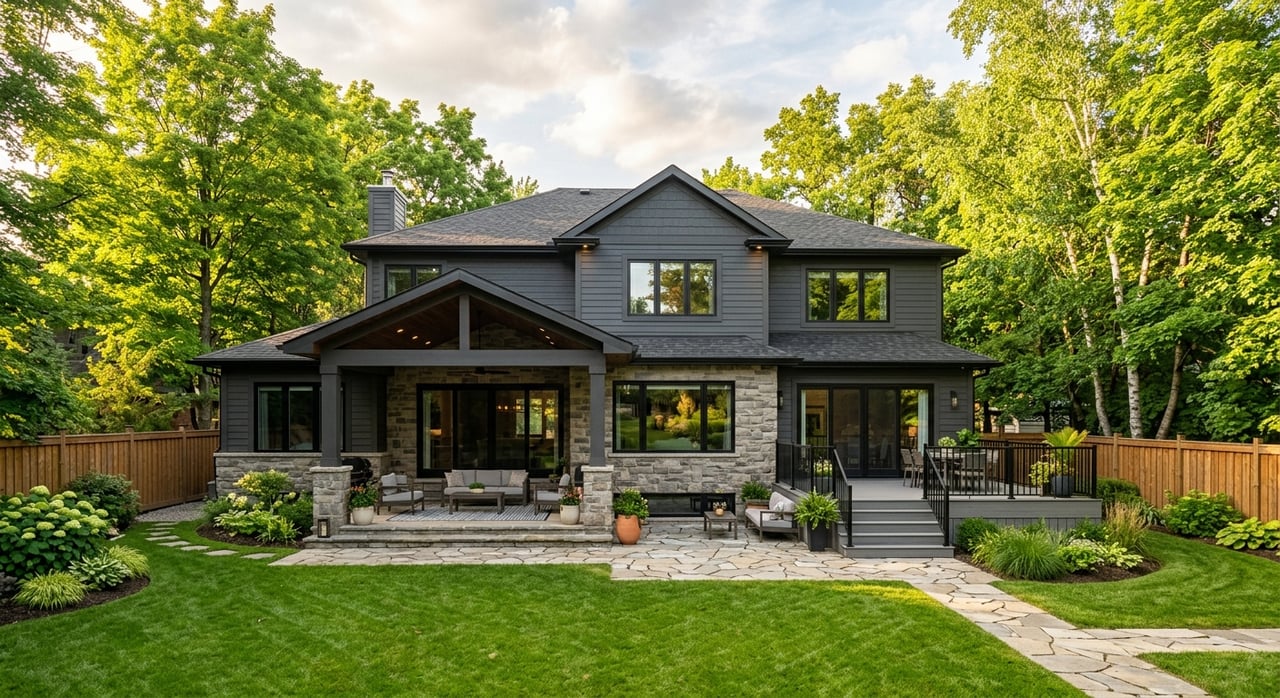
How Move-Up Buyers Approach Mequon Neighborhoods
June 18, 2026
June 18, 2026
Thinking about moving up in Mequon? The challenge usually is not deciding whether you want more space. It is deciding what kind of space fits your life best. If you are comparing larger lots, easier commuting routes, and day-to-day convenience, Mequon gives you several distinct ways to move up. Let’s dive in.
Mequon stands out as a higher-value, owner-heavy market in the North Shore area. Census QuickFacts report an owner-occupied housing rate of 86.0%, a median value of owner-occupied housing units of $501,600, and a median household income of $144,051. That profile tends to attract buyers who are thinking about long-term fit, not just a short-term move.
The city also offers a mix that is hard to find in more compact suburbs. Mequon describes itself as a rural city on Lake Michigan north of Milwaukee, with about half its land undeveloped and still mostly farmed. You also get parks, golf courses, the Milwaukee River, and interstate access, which is why many move-up buyers look here when they want more room without feeling cut off.
If you are trying to understand Mequon, it helps to think by area type rather than assume every home fits into a neatly defined neighborhood box. The city’s planning framework separates residential areas by lot size and density, including rural residential, transitional residential, urban residential, and more compact housing categories.
That matters because your move-up goals may have less to do with a neighborhood name and more to do with what you want every day. In Mequon, buyers often sort homes by three big priorities:
This approach gives you a more practical way to narrow your search.
If your main goal is more land, the north and west sides of Mequon often deserve an early look. The city’s low-density residential planning includes areas that range from about two acres to five acres per dwelling unit, which supports the larger-lot feel many move-up buyers want.
This part of Mequon can appeal to you if you are trading a smaller suburban lot for more privacy, more yard space, or a more rural setting. It can also be a strong fit if you want room for outdoor living, recreation, or simply more separation from nearby homes.
The tradeoff is convenience. Larger lots can mean longer drives to errands, schools, or dining compared with more centrally located parts of Mequon. For many buyers, though, that trade is worth it when space is the top priority.
You may want to focus on these areas if you are looking for:
If your current home feels tight both inside and out, this is often the version of Mequon that changes the conversation.
If daily convenience is just as important as square footage, Town Center can be an appealing way to approach Mequon. The city’s comprehensive plan describes Town Center as its traditional neighborhood district and mixed-use area, designed around pedestrian activity and compact development.
The plan also calls for parks, retail, service uses, and elementary school facilities within walking distance. For move-up buyers, that means you may be able to gain home size or lifestyle upgrades while staying closer to everyday destinations.
This is a useful option if you want a more connected feel. Instead of maximizing lot size, you may be prioritizing ease, access, and a setting that feels a little more self-contained.
Town Center may fit you well if you value:
For some buyers, this area offers the best middle ground. You still get Mequon’s broader lifestyle appeal, but with less emphasis on distance and more emphasis on daily function.
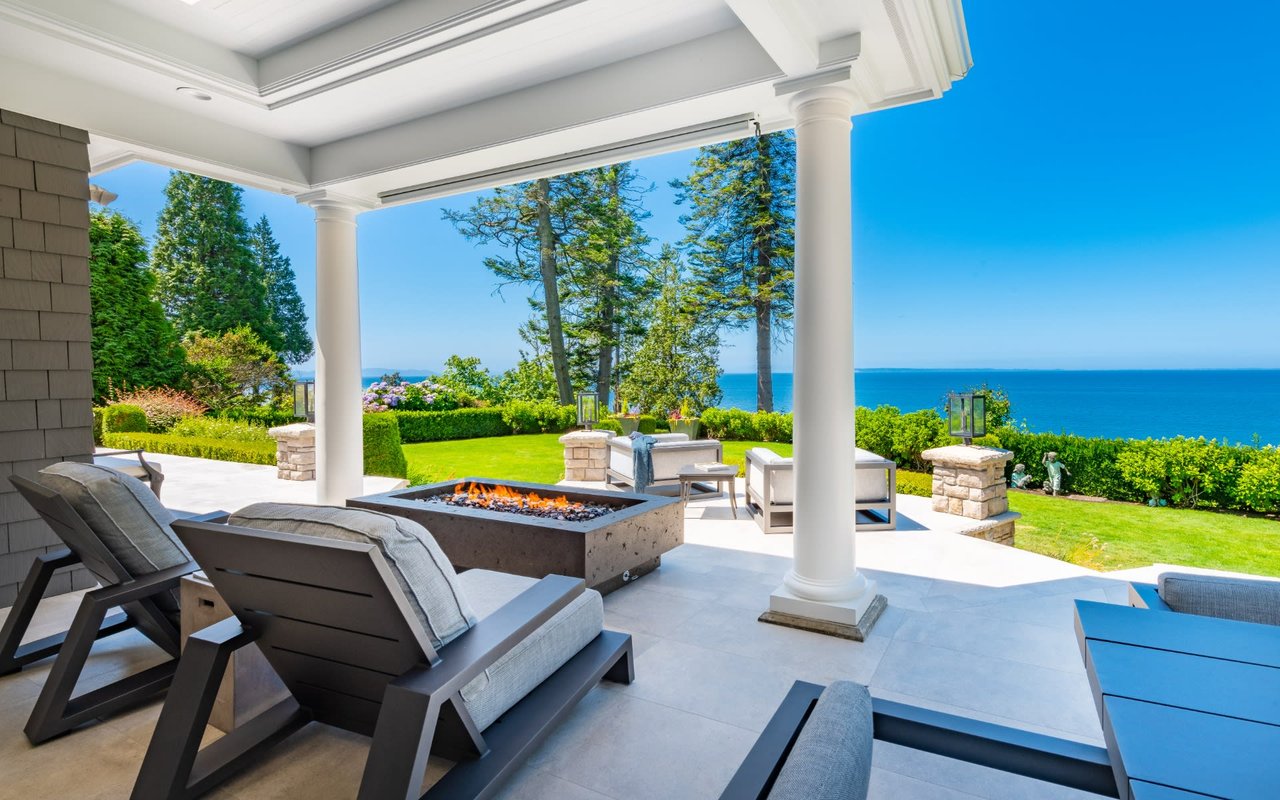
If setting matters as much as the home itself, the east or lakeshore side of Mequon can stand out. The city’s planning materials highlight Lake Michigan bluffs, shoreline features, scenic corridors, and major watercourses, all of which shape the character of this part of the city.
This area may appeal to you if you are moving up for a stronger sense of place. Some buyers are not just seeking more square footage. They want a home that feels tied to open space, natural scenery, and outdoor recreation.
Mequon’s park system adds to that appeal. The city’s 2025 park brochure lists 25 parks totaling 1,181.7 acres, along with the 30-mile Ozaukee Interurban Trail and the 438-acre Mequon Nature Preserve.
You may want to look more closely here if you are drawn to:
For buyers who want the home and the backdrop to feel special, this part of Mequon often deserves a spot on the shortlist.
For many move-up buyers, commuting still shapes where the search begins. Mequon has strong road access, with Interstate 43 running through the city and connecting with I-94, Highway 60, Highway 100, Highway 167, and Highway 190.
That connectivity can make Mequon workable for buyers who need access to Milwaukee and surrounding employment centers. Census QuickFacts list the mean travel time to work at 21.9 minutes, which helps frame the city as spacious without necessarily being far removed from the metro area.
It is also worth knowing that the Ozaukee County Express bus was permanently eliminated on June 28, 2024. That makes car-based commuting more important than it once was, especially if your work schedule depends on consistent downtown access.
If commuting is a major factor, many buyers start by weighing:
This is where your search priorities need to be honest. The largest lot is not always the best fit if you are driving frequently.
Move-up buyers often focus on square footage first, but daily-life anchors can shape satisfaction just as much over time. In Mequon, those anchors include parks, trails, education campuses, and service access.
The city points residents to nearby anchors such as Concordia University Wisconsin and the Mequon campus of MATC. Along with the local park network and Town Center functions, these features help Mequon feel more self-contained than a typical bedroom suburb.
School planning may also factor into your home search. MTSD serves Mequon and Thiensville with three elementary schools, two middle schools, and one high school, and the district notes that elementary attendance boundaries were adjusted for the 2022-23 school year. If school assignment is important to your search, address-level verification matters for any specific home.
Some move-up buyers arrive in Mequon after looking at closer-in North Shore communities. That comparison can be helpful, especially if you are choosing between more land and closer proximity to Milwaukee.
Fox Point describes itself as a suburban residential community of 2.8 square miles with about 6,600 residents. Milwaukee County reports River Hills has roughly 1,600 residents. Compared with those more compact community profiles, Mequon generally offers more land, more open space, and more room for larger homes.
That does not make one option better than another. It simply means Mequon often serves buyers who want to stretch out more, while some closer-in communities may appeal more to buyers who want a tighter footprint and shorter reach to Milwaukee.
If you are moving up in Mequon, a simple framework can make the process easier. Start with the lifestyle question before you start with the house count, bedroom count, or finishes.
Ask yourself which of these three priorities matters most:
Once you know that answer, the Mequon search tends to get clearer. Instead of trying to tour everything, you can focus on the parts of the market that match how you want to live.
A thoughtful move-up strategy is about more than buying a larger home. It is about choosing the version of Mequon that supports your routine, your commute, and your long-term goals. If you want guidance on how to compare Mequon area types and build a smart buying plan, connect with Walters Realty Group.

Whether you are buying, selling, or stepping into a new chapter, Walters Realty Group delivers the expertise, strategy, and elevated service to make your move seamless from start to finish. Connect with our team today and let us guide your next move with confidence.